



August and September Wedding Flowers in Minnesota: Styles for Late Summer and Early Fall
31st Aug 2026
The final days of August bring Minnesota weddings into an interesting design window. Summer color still has a place, while September opens the door to warmer tones, richer texture, and the first visual notes of fall. For couples considering August wedding flowers, Minnesota offers a seasonal transition that doesn’t require an immediate shift into a fully autumnal palette.
Dahlias, sunflowers, deeper foliage, and refined rustic details can all shape this look, but none has to define it. Flower availability, the venue, the wedding palette, and each couple’s preferences give us a much better foundation for creating a floral direction that feels considered and personal.
From bridal bouquets and ceremony flowers to centerpieces and reception designs, we’ll look at ways to carry late-summer color into early fall. We’ll also cover transitional palettes, seasonal flexibility, and what to bring when planning the flowers with our Main Floral wedding team.
Late Summer and Early Fall Don’t Need a Hard Floral Divide
Minnesota’s move from August into September gives us room to work between two visual seasons. A September wedding doesn’t automatically call for dark burgundy, rust, or a distinctly autumnal look. Bright late-summer flowers can remain part of the palette while fall enters more gradually through warmer color, deeper green foliage, added texture, and grounded neutrals.
For a lighter direction, we might recommend yellow, cream, and green. Peach, rust, and soft pink can introduce more warmth, while plum, mauve, and green create a richer combination. Gold with ivory and deeper foliage can move closer to fall, and orange with cream and muted green offers another way to bridge the season.
These are design directions rather than fixed packages from our wedding florist team. We can adjust the palette around the venue, the couple’s preferences, and the flowers available for the wedding date, keeping the transition between summer and fall intentional rather than tied to a strict seasonal formula.
Dahlias Bring Shape and Depth to the Seasonal Transition
Dahlias bring plenty of visual interest through layered petals, substantial flower heads, and a wide range of form. Their strong focal presence can give a design definition without requiring every flower in the arrangement to have the same scale or texture.
Their color can also move in different seasonal directions. Paler, muted dahlias can sit comfortably within a softer late-summer palette, while richer warm tones can help carry the design toward early fall. The exact colors and varieties available will depend on sourcing at the time of the wedding.
When available, we can consider dahlias for bridal bouquets, bridesmaid flowers, statement arrangements, and reception designs. They can become a prominent feature or work among other blooms, depending on the overall floral direction. If a specific dahlia variety or color is important, we recommend discussing it during planning rather than treating a particular stem as guaranteed.
Sunflowers Keep September Wedding Flowers Bright
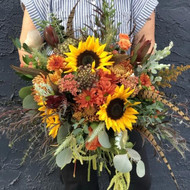
Sunflowers create a much bolder visual contrast than dahlias. Saturated yellow petals, dark centers, and their recognizable scale make them an immediate focal point, giving September wedding flowers a way to hold onto late-summer brightness as warmer early-fall color begins to appear.
For the palette, we might pair sunflower yellow with cream or white for a cleaner contrast, fresh or muted green for a more natural direction, or warm orange accents and deeper foliage to move the design closer to fall. The surrounding colors can shift the overall look without losing the sunflower’s distinctive character.
We can also use sunflowers selectively rather than repeating them throughout every floral piece. A few well-placed stems can establish the color direction while leaving room for other flowers, foliage, and textures across the wedding design. Since seasonal availability can change, we recommend confirming sunflowers with our team rather than assuming they will be available for every September date.
Rustic Wedding Flowers Can Look Refined
Rustic wedding flowers don’t need to rely on burlap, mason jars, or an overly country look. We can approach the style through texture, material, and setting instead, using looser floral shapes, layered foliage, textural accents, and natural surroundings to create a more refined interpretation.
In a venue with wood details or other natural finishes, the flowers can respond to what is already present rather than compete with it. Ceramic, glass, or understated vessels may complement that setting where appropriate, while varied stem heights and subtle movement can keep the arrangements relaxed without making them look unfinished.
Color gives us another way to control the direction. A brighter late-summer palette can keep rustic styling fresh, while coral, blush, warm neutrals, or deeper early-fall tones can create a softer seasonal shift. The scale of the arrangements should also suit the venue and leave guests comfortable at tables and throughout the space.
Rustic is simply one design direction couples can choose. We can shape it around the venue, palette, available flowers, and the overall look the couple wants for the wedding.
Carry the Palette From the Bridal Bouquet to the Ceremony
The bridal bouquet can establish the main color, flower, and texture direction for the wedding without becoming a template that every other arrangement has to copy. Bridesmaid flowers can echo selected colors or forms on a smaller scale, creating a visual connection while still allowing the bridal bouquet to hold its own presence.
Our personal flowers can extend that direction through bridal bouquets, bridesmaid flowers, boutonnieres, corsages, flower crowns, and flower girl petals. Depending on the design and seasonal availability, details such as a peony, anemone, or ranunculus may be considered, but specific varieties should always be confirmed during planning rather than assumed for a particular date.
From there, we can carry the palette into the ceremony with arbor flowers, altar arrangements, and aisle décor. Repeating a few deliberate colors, foliage choices, or textures creates continuity without requiring us to place every flower variety in every piece.
The result can feel connected from the walk down the aisle through the ceremony setting, with each floral element playing a distinct role within the same overall design.
Give Reception Flowers Their Own Scale
Once the ceremony palette is established, the reception gives us more room to vary the scale. We offer small, medium, and tall centerpiece options, and the right proportions depend on the tables, room, surrounding décor, and how comfortably guests need to see and speak across the setting.
A rustic or transitional seasonal palette can take several forms throughout the reception. Some tables may suit compact floral moments, while others can accommodate fuller centerpieces or elevated designs where appropriate. Cake flowers can carry another touch of the palette into the room without requiring every arrangement to look identical.
We can connect these different designs by repeating selected colors, foliage, or textures. That approach creates consistency across the reception while allowing each arrangement to respond to its particular place and scale.
Rather than treating every table as a duplicate, we can plan the flowers around the room as a whole. The goal is a reception that feels visually connected from one detail to the next without unnecessary repetition.
September Color Can Stay Soft or Move Deeper
Couples getting married in September have more than one way to approach seasonal color. The month can still accommodate a lighter late-summer palette of cream, soft pink, peach, yellow, and fresh green, particularly for couples who aren’t ready to move into deeper fall tones.
For a warmer transition, we might recommend gold, terracotta-inspired orange, deeper green, plum, or muted mauve. Neutral shades can bridge brighter and richer colors, giving us room to adjust the balance without making the entire design feel distinctly summer or fall.
Dahlias or sunflowers can influence that palette without dictating every other flower. A sunflower might introduce a strong yellow focal point, for example, while the surrounding flowers and foliage take a quieter direction. Dahlias can play a similar role through their color and texture when available.
Personal preference should lead these decisions rather than an arbitrary rule about what a September wedding is supposed to look like. We can build the palette around the colors the couple love, then consider the venue, seasonal availability, and overall floral direction.
Bring Late-Summer Color Into Your Minnesota Wedding
September leaves plenty of room between summer brightness and deeper fall color. Dahlias, sunflowers, warm foliage, softer blooms, and textural accents can take the design in different directions depending on seasonal availability and the vision for the wedding.
Rather than choosing each flower in isolation, consider how the complete setting should look—from personal flowers and ceremony designs to centerpieces and reception details. Our wedding gallery can help you gather ideas, while our consultation page explains how we can begin planning the floral direction together.
From our Anoka local flowers shop, we serve weddings throughout the surrounding Twin Cities metro, including the greater Minneapolis area. Browse our wedding work, then schedule a complimentary consultation with us. Bring your date, venue, palette, and floral ideas so we can start shaping a design for your celebration.
Frequently Asked Questions
Are dahlias a good choice for a September wedding in Minnesota?
Dahlias can work beautifully in September wedding designs when the desired varieties and colors are available. We recommend discussing them during your consultation since seasonal flower availability can change.
Can sunflowers work in a refined wedding design?
Yes. We can use sunflowers selectively for strong color and contrast, then balance them with complementary flowers, foliage, and textures to create a more polished direction.
Can we request local flowers for our Minnesota wedding?
You can share a preference for local flowers during your wedding consultation, and we can discuss what sourcing options may be available for your date. We don’t recommend assuming a specific locally grown flower will be available until we have confirmed it.
How far ahead should we plan our wedding flowers with Main Floral?
We recommend beginning the floral planning process once your wedding date and venue are secured. Our complimentary consultation gives us a chance to discuss your palette, venue, floral ideas, budget, and other details before we prepare a custom proposal.